Can I access my parents' bank account — and should I be added to it, or use a power of attorney?
Published by Corso & Alexander · About David Luria · Updated
The people and first-person scenes in this article are fictional/composite examples, created to illustrate the issues. They are not the author’s personal history. The scenes illustrate caregiving situations; they are not evidence of clinical or legal outcomes.
You can access your parents' bank account while they are living, but only in one of a few named shapes, and the shape decides everything that happens afterward. Your parent can add you as a joint owner, which makes the money legally yours as well as hers and hands it to you outright when she dies. She can name you on a convenience account, which lets you deposit, withdraw and write checks while the money stays entirely hers. Or she can name you her agent under a durable power of attorney, and the bank records that authority its own way, on its own form, for that account alone. The shortcut most families take instead — a child quietly using the parent's own login — is the one that fails hardest, because to the bank's fraud system a son on a phone three counties away looks exactly like a thief. So the honest answer to should I be added is: be added as something, in your own name, while your parent can still sign, and stop borrowing hers.
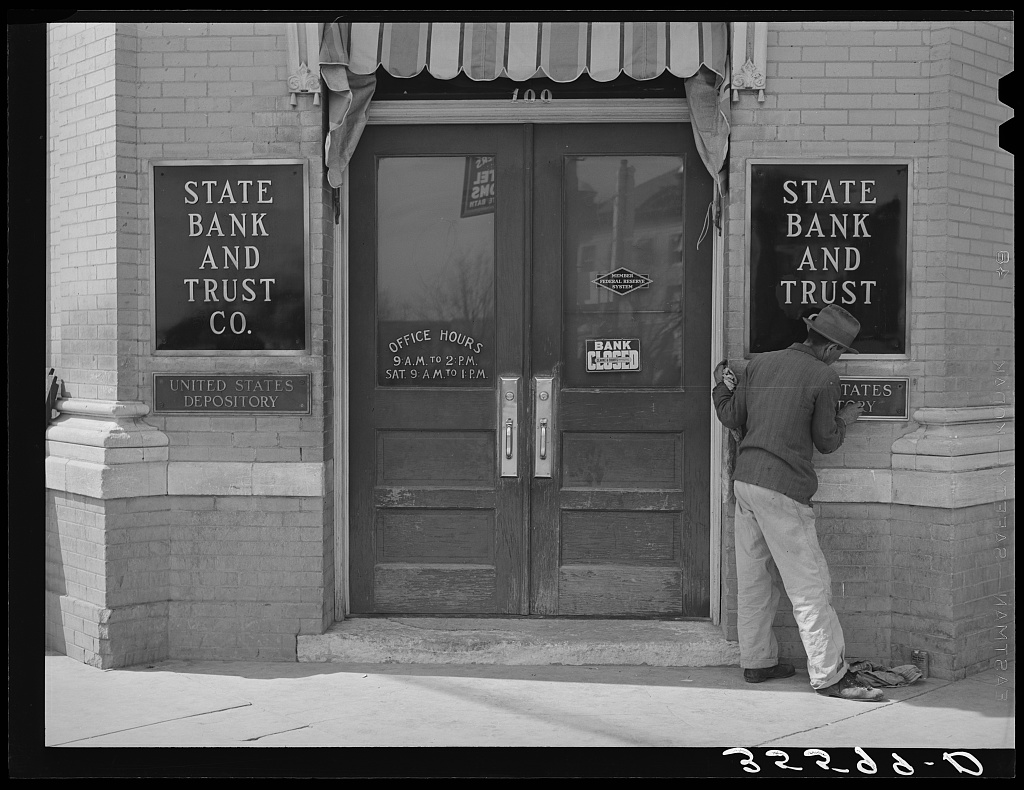
How can I access my elderly parents' bank account? The letter that was not addressed to me
The letter came from my mother's bank, and it was addressed to her. For her protection, it said, they had reset her online credentials after detecting unusual sign-in activity. She should call the number on the back of her statement to re-establish access.
I had done the work on that account a year and a half earlier. I had walked into the branch with the durable power of attorney and sat across from a man named Ortiz who read every page, made copies, and put me on the account as her agent. That part I did right. What I did next, I did the easy way. My mother, Sophia, gave me her username and password — "it's simpler, honey" — and for eighteen months that is how I got in. I paid her long-term-care premium from that account every quarter and checked the balance on my phone in parking lots, at whatever hour I had a free minute.
Which is exactly what an account takeover looks like from inside a fraud system. A login that used to come from one kitchen laptop now came from a phone moving around the state at odd hours. Nobody at the bank decided to shut me out. Their software saw a stranger and closed the door. And the notice went to the account holder — a woman who no longer opened her mail, about a login she had never once used herself.
I had the legal authority. I had the paper on file. What I did not have was access that was actually mine.
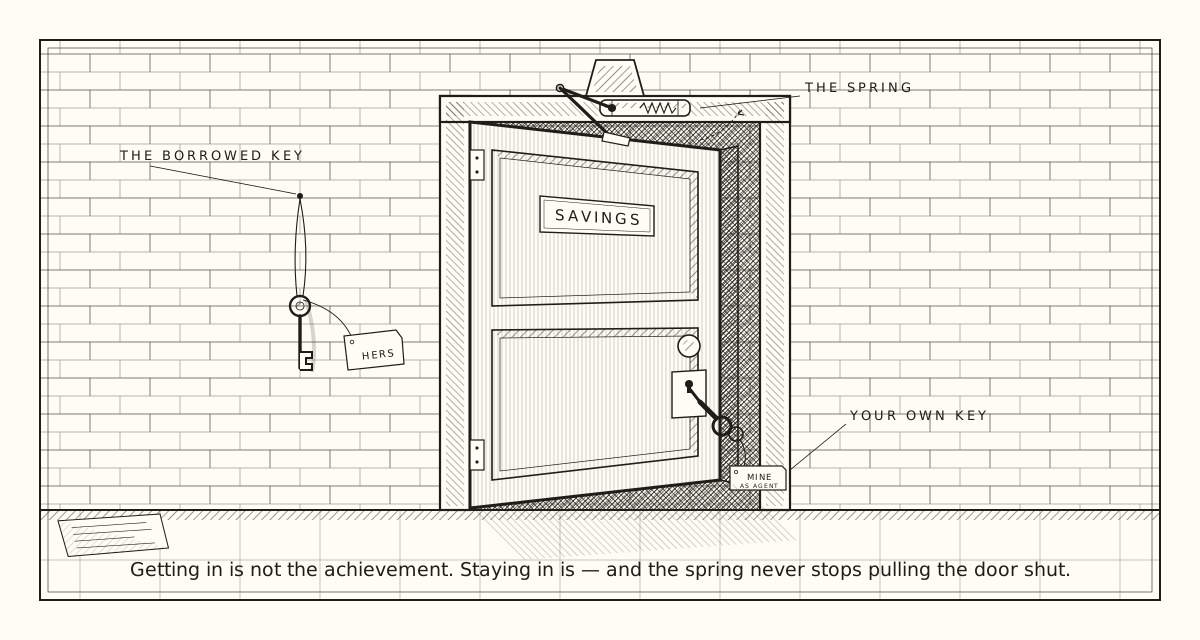
If you are typing can I access my parents' bank account at eleven at night, you are standing near that door. Here is what I learned once it closed on me.
Should I be added to my elderly parent's bank account? The three ways in
There are three shapes a bank will recognize, and they are not interchangeable. Which one you want depends on what you are trying to do and, more than anyone tells you, on what happens later.
Joint owner. Your name goes on the account beside hers. It is the simplest to set up and the one most families reach for first. But it changes who the money belongs to. The Consumer Financial Protection Bureau's guide for financial caregivers says it in one line: a convenience account "is not the same as a joint account, where money is jointly owned and the joint account holder automatically gets the money when you die." If you have a brother, and your mother's will says everything divided equally, the checking account you were added to for convenience may not be divided at all. It may simply be yours. That is not a loophole. It is the design, and it surprises grieving families at the worst possible moment.
Convenience account, sometimes called an agency account. This is the shape most people actually want and few have heard of. Your parent names you as someone who can help — deposit, withdraw, write checks — and the money stays hers. The CFPB puts it plainly: it "does not change the ownership of the money in the account or give your helper the right to keep the money when you die. The money belongs only to you." Not every bank offers it under that name. Ask for it by name, or the teller may steer you to the joint account, the one they know how to open.
Agent under a durable power of attorney. Your parent has signed a document naming you. You bring it to the bank, and the bank — after reading it, questioning it, and quite possibly asking for its own form on top — records you as her agent on that account. You act in her name; the money is hers; a power of attorney ends when she does. This is the shape with the widest reach, and the one banks resist most, for reasons I wrote about earlier. It is also the only one that follows you to the brokerage and the insurer, because it is her authority, not a bank product.
There is a fourth thing, which is not access but is worth knowing: a trusted contact. Brokerages in particular will let your parent name someone the firm can call if it sees trouble. Trusted contacts, the CFPB notes, "don't have access to your money — they get notified if the financial institution sees signs of financial exploitation." It opens no doors. For a parent not ready to hand anyone a key, it is a first step.
So: should you be added? To something, yes. The mistake is being added to the wrong shape because it was the one the branch could do that afternoon.
Can I manage my parents' bank account with a power of attorney?
Yes — and then, if you are not careful, no again, about ten months later.
This is the part nobody warned me about. Getting in is not the achievement. Staying in is. We treat access like a door we open once. In reality it is a door with a spring on it, and the spring is always pulling it shut. Passwords get force-reset. Fraud systems flag anything unfamiliar. Banks re-verify on their own schedule, and a standing arrangement can quietly fall off the record — not revoked, just not carried forward. The authority you won last year is not a possession. It is a subscription, and the renewal notice goes to her.
None of that is malice. Banks are built to protect themselves, not to preserve your continuity, and every fraud rule that locked me out was doing its job. So the real work of managing a parent's account is not the setup. It is the maintenance of a thing designed, on purpose, to lapse. Here is what that looked like once I put down the borrowed key.
I asked the bank for my own login, as her agent. Not hers — mine, in my name, showing her accounts alongside my own. Most large institutions will do this if you ask, and almost none will offer it. The day mine arrived I stopped using hers. A credential in my name cannot be reset by a letter to her house, and does not look like a break-in.
I learned that authorization is granted per account, not per person. The certificate of deposit she opened the next spring did not inherit the access on the checking account. Every new account is a fresh door, and you have to be added to it again, with the same paper.
And I asked the question with the hard deadline nobody announces: how old a power of attorney will you accept? The document itself does not expire, but each bank has its own idea of stale. Some honor one signed decades ago; others push back on one signed last year. You will not know until you ask — and a power of attorney can only be refreshed while your parent still has the capacity to sign it. One day it cannot be redone at all. We asked. I put a reminder on my calendar a year ahead of the answer.
Can I control my parents' bank account?
I want to sit with that word, because it was mine too, some nights.
Control is what you type when the fear is fresh — a bill has bounced, a stranger has called, you have watched her write a check to something she could not explain. What you mean is I need to be able to act before it goes wrong. That is fair. But the word costs you at the branch and at her table.
At the branch, a child who says I need to control my mother's account is a child the teller has been trained to slow down. The extra questions, the manager from the back, the form on top of your lawyer's form — all of it exists because some children mean exactly that, and the bank cannot tell you from them. Walk in saying my mother has named me her agent and I would like to know what you need to record that and you are a different person in their eyes. Same paper. Different afternoon.
At the kitchen table it costs more. It is her money. She earned it across forty years of a job she did not always like, and has decided where it went since before you were born. What she refuses, when she refuses to add you, is not the help. It is the story underneath — that the woman who ran a household on one income can no longer be trusted with a checkbook. Lead with control and she hears you are not competent, and she is right to, because that is what you meant without saying it.
The conversation that worked in our house was: "The bank locked me out of the account I pay your premium from, because I was using your password, and I am sorry. I would like to fix it with you, in your name and mine, instead of around you." The apology was the door. After it, which shape do you want me on was a question between two adults, not a test she might fail.
So no, you probably cannot control your parents' bank account, and I would gently suggest you do not want to. What you want is standing — a way in that is yours, that she gave you, that the bank has written down. Standing survives the fraud system. Control does not survive the first hard conversation.
How can I protect my elderly parents' bank account?
Once you have a way in that is yours, protecting the account is mostly finding the places where one thing breaking takes everything with it.
The worst offender is her cell phone. If every institution texts its verification code to that one number, then the day that phone is lost or left in a coat pocket, you are locked out of all of them at once. One number, one battery, one carrier, carrying the whole system. That is not access; that is a fuse waiting to blow. Where the bank allowed it, we moved the verification for my agent login to my phone. Where it did not, we wrote down which institutions text her number, so that when it goes dark we know which doors just closed. If her phone is where you are stuck, the note on a parent's phone goes deeper.
The second is the inventory. One page: every institution, every account, every door into it — online login, phone line, in-branch record, the agent designation on file — which credential each door uses, and when it resets or expires. Not in your phone's notes. A printed page in a locked drawer. When something breaks at 4:55 on a Friday, this is the difference between a phone call and a lost weekend.
The third is a backup. If you are the only agent, your name is the single point of failure. My sister said yes, after a long pause, to being the second name — so that if I am the one in the hospital bed, the premium still drafts.
And the fourth is the one people skip because it feels paranoid: test it. Once a quarter, open every door — log in on your own credential, get through verification on the phone line, confirm the agent designation is still on file. Access you have not tested is access you are only assuming, and the assumption breaks at the worst possible time.
None of this is about suspecting her. It is about suspecting the spring on the door. Keeping a scammer out is a separate job, and I wrote about that one on its own.
What to say at the window
The words that worked, in the order they worked.
"My mother would like to add me to this account. Before we choose how, can you tell me what this bank offers — joint owner, a convenience signer, or agent under her power of attorney — and what each one changes about who owns the money?" This keeps the teller from opening the joint account by reflex. Ask it with her beside you.
"For the power of attorney, what exactly do you need from us — your own form, a copy of ours, an affidavit? Can I have that in writing?" Get the list whole, up front. In my first year I let every institution tell me one requirement at a time, and each one added weeks.
"Can you issue me my own online login as her agent, rather than my using hers?"
"How old a power of attorney will this bank accept?" Write the answer on the front of the folder.
"Which phone number will you send verification codes to, and can that be mine for my login?"
None of the five needs her account number said out loud. If a representative wants identifiers just to answer a policy question, you are being routed into a process instead of getting the policy. Hold out until someone answers the policy itself.
What it cost when it went wrong
Let me be honest about the bill, because the search results were not.
The letter sat in her stack for eleven days before I saw it. The premium was due inside those eleven days. It did not draft. The insurer sent a notice — to her — and the grace period was most of the way gone before I understood why my mother kept saying a man had called about her policy.
Getting back in took the better part of an hour, a supervisor, and a short lecture about credential-sharing that I had coming. The pleasant young man on the line was, I realized halfway through, checking whether I was the unusual activity. I had made it necessary.
And there was a cost that shows up on no statement. For eighteen months I had handled my mother's money the way you handle a door by wedging it open with a shoe. When the shoe slipped, the person who paid was not me. It was a woman who had never once logged in, reading a letter that told her, in the bank's careful language, that someone had been in her account.
She asked me who. I told her.
The landing
The bank still sends its letters to her. The fraud system still watches for strangers. But the login is mine now. The verification comes to my phone. The inventory is one page in a drawer. My sister is the second name. And once a quarter I open every door on purpose, so that no Thursday letter can close one without my knowing.
The next security review came about ten months later. I know because I got a text — on my phone, for my login — and re-verified in ninety seconds, standing in a grocery line. My mother never knew. The premium drafted on schedule. The door stayed open, because this time I had built something that held it, instead of walking through once with a borrowed key and hoping.
That is what access to your parents' bank account actually is. Not a key you turn once. A system you maintain, quietly, on a schedule, against a spring that never stops pulling the door shut. The front page says what this small house is trying to do about it, one book at a time.
Sources and further help
- Consumer Financial Protection Bureau: Considering a financial caregiver? Know your options
- Consumer Financial Protection Bureau: Can a family member or friend help me with bill paying and banking?
Source links checked September 23, 2026. General information, not legal advice; account types and what a bank requires to record an agent vary by institution and state.
This is the idea at the center of one chapter of Managing Mom's Money With Love, the Tempered Press field guide to your aging parents' finances, out now on Amazon. One email when a book ships. Nothing between.
The books
- Managing Mom's Money With LoveA field guide to your aging parents' affairs — and the institutions that keep saying no. out now on Amazon.Buy on Amazon now
One email when a book ships. Nothing between. Unsubscribe any time; never sold or shared.