What is ambiguous loss in dementia — and how do you live with it?
Published by Corso & Alexander · About David Luria · Updated
The people and first-person scenes in this article are fictional/composite examples, created to illustrate the issues. They are not the author’s personal history. The scenes illustrate caregiving situations; they are not evidence of clinical or legal outcomes.
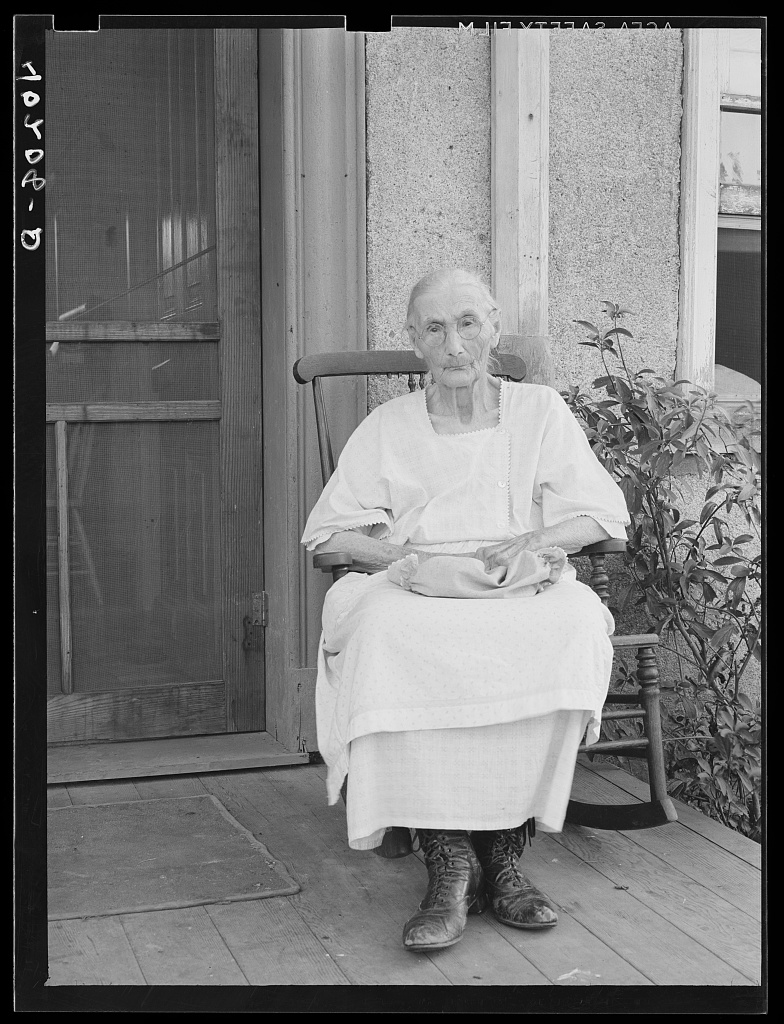
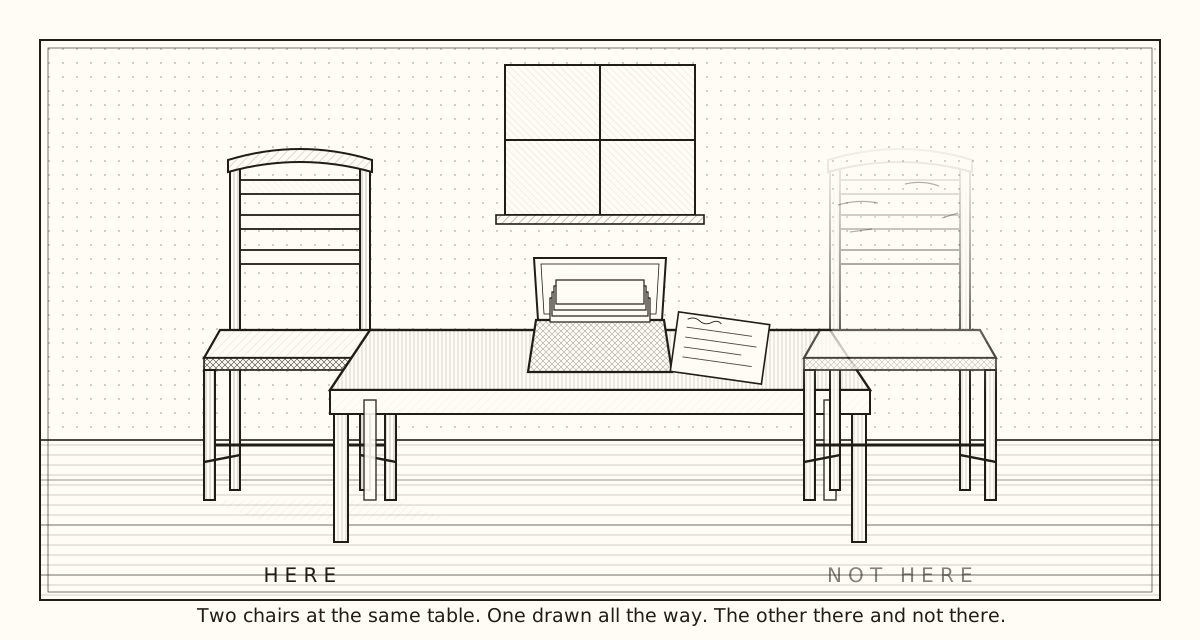
Ambiguous loss in dementia is grief for a person who is still alive. Your parent is sitting in the chair and is not in the chair: the body is present, and the person you knew comes and goes, and some days does not come at all. Family therapist Pauline Boss developed the theory of ambiguous loss: uncertainty about a person’s physical or psychological presence can leave grief without a clear resolution. Nobody died. There is no funeral, no casserole on the porch, no week off work, no word for what you are. And so the grief has nowhere to go, and it turns into guilt, or anger, or a numbness you mistake for coping. The way you live with it is not to resolve it, because it cannot be resolved. It is to name it, to stop waiting for the ending that is not coming, and to hold two true things at once: she is here, and she is gone. That is not you failing to cope. That is the situation, and the situation is broken, not you.
Here is the afternoon I learned what I was feeling had a name, and what the name changed.
What is an example of ambiguous loss?
My mother, Sophia, keeps her recipes on index cards in a green tin box, and the cards are soft at the corners from sixty years of flour and thumbs. One Sunday in October I sat at her kitchen table while she made the apple cake she has made every October since before I was born. I did not help. I never helped. That was the deal: she cooked, I talked, and the kitchen smelled like cinnamon and burnt sugar and it was the safest room in the world.
She got the apples peeled. She got the butter softened. And then she stood at the counter with the green tin open and the card in her hand and read it, and read it again, and I watched her face do something I had never seen it do. It went blank. Not confused. Blank, as if the card were in a language she used to speak.
"Which one is this?" she asked me. Her own handwriting. The cake she has made two hundred times.
I told her. She nodded, and made the cake, and it was fine, and we ate it. And about an hour later, wiping the counter, she looked over at me with a warmth I knew completely, and said, "You should call your mother more, you know. She worries."
I did not say anything. I could not find a sentence. She went back to the counter and hummed, and I sat at the table with the cake in front of me, and I could not have told you what I was feeling, except that it was enormous and had no shape.
That is ambiguous loss. It is not the diagnosis, which came later and had a name of its own. It is the afternoon before the diagnosis, when the person who made the cake is right there and is also somebody who has to ask what the cake is. It is loving someone who is here and not here, in the same hour, at the same counter.
If you have a parent with dementia, you do not need me to describe it. You need to know it has a name, because the name is the first door out.
Ambiguous loss and grief in dementia: why it hurts the way it does
Here is what I did not understand for a long time. I thought the problem was that I was grieving too early. My mother was alive. She knew me most days. Who was I to be mourning a woman who was, at that moment, humming in her own kitchen? It felt like a betrayal, and so I pushed it down, and what came up instead was a short temper and a tiredness that sleep did not touch.
Ambiguous loss in dementia does not hurt because it is grief. It hurts because it is grief that never gets to finish.
Ordinary grief, the kind with a funeral, is terrible, and it has a shape. There is a day it starts. There are rituals older than any of us that tell you what to do with your hands: you sit, people bring food, someone speaks, you bury or burn or scatter, and then you begin, slowly, to make a life on the other side of it. It is not fast. But it moves. It has a direction.
This grief has no direction, because the loss is not done. Every time you begin to let go, she comes back for an hour, and you are ashamed of having let go. Every time you settle into hope, she asks you which cake it is. You cannot mourn her, because she is here. You cannot have her, because she is not. And the world around you sees a living mother and expects you to act like the child of a living mother, so you do, and the gap between what you show and what you carry is where the exhaustion lives.
There is a second cruelty, and it is quieter. Every culture on earth built something around death: a wake, a shiva, a rosary, a year of mourning, a casserole. That inheritance is real, and it is yours, and it was never handed to you, because nobody died. You are grieving outside every ritual that was built to hold grief. No one says I'm sorry for your loss, because as far as anyone can see, there has not been one.
So the grief goes underground and comes up as something else. Guilt, mostly: guilt for being angry, for being tired, for wanting it over, for catching yourself at the counter wishing she would just not ask. And the guilt is worse than the grief, because guilt has a target. Grief says something terrible is happening. Guilt says you are the terrible thing.
That is the lie ambiguous loss tells, and it is the whole reason the name matters.
Pauline Boss and where the idea came from
The name is not mine and it is not new. Pauline Boss is a family therapist and a professor emeritus at the University of Minnesota, and she began working on this in the 1970s with the families of pilots missing in action in Vietnam: wives who did not know whether they were wives or widows, children who could not say whether their father was dead. She noticed that these families were not simply grieving. They were stuck, frozen in a loss that could not be confirmed and so could not be mourned. She called it ambiguous loss, and she has spent her career on it since. Her book of that title came out from Harvard University Press in 1999, and she later wrote one specifically for people in our position, called Loving Someone Who Has Dementia.
Boss describes two kinds. In the first, the person is physically gone but psychologically present: the missing soldier, the child who ran away, the parent who left. You keep a place for them. In the second, the person is physically present but psychologically absent, and this is ours. Dementia is the clearest case, but Boss is careful to say the same shape appears in addiction, in brain injury, in the long tail of a stroke, and, more gently, in ordinary old age, when the parent who ran the family slowly stops being able to.
That last point is the one I want you to hold, because I have watched people talk themselves out of their own grief with it. My mother only forgets names. It's not Alzheimer's. I have no right to this. Yes, you do. Dementia is the deep end of the pool, and it is the case this post is about. But ambiguous loss is the whole pool. If your father is still sharp and can no longer drive, and you feel a grief you cannot justify, that grief is on the same spectrum, and it qualifies. Nobody is checking tickets at the door.
Boss's central claim, the one that reorganized my thinking, is that the problem in ambiguous loss is not inside the griever. It is in the situation. You are not failing to process a loss. You are being asked to process a loss that, by its nature, cannot be processed, and your mind is doing exactly what a mind does when it is handed an unsolvable problem: it loops. Fault lies with the problem, not with the person holding it.
I read that sentence and put the book down and sat with it for a while. The situation is broken, not you. I had spent a year assuming the reverse.
How do you deal with ambiguous loss?
I want to be honest that there is no fix, because you would smell one if I offered it. What there is, is a change of stance, and it comes in three parts, and each one opened only after I had the name.
The first is that a named thing can be tamed. This is not a proverb. There is real research behind it. Psychologists at UCLA, in work led by Matthew Lieberman, found that putting a feeling into words measurably calms the part of the brain that generates the alarm. The psychiatrist Dan Siegel gave it the phrase everyone uses now: name it to tame it. When I sat at that table with the cake and could not say what I felt, the feeling ran the room. When I could say this is ambiguous loss, this is grief for someone who is alive, it did not go away. But it got smaller. It became a thing I was carrying instead of a thing I was.
The second is that once it has a name, you can go claim the help that was always yours. Humanity did not leave you nothing. It left you every ritual and every wisdom it ever built around loss; it just filed them under a word you were not allowed to use. So use it. You are allowed to sit with a friend and say I am grieving my mother while your mother is alive, and let them bring the casserole. You are allowed to mark it. Some families I know light a candle on a certain day, not for a death but for the year the person began to go. Some write the letter they would have written after. Some go to a grief group and say, at the door, no one has died, and are let in, because the people in those rooms know exactly what they mean. None of this is morbid. It is the inheritance, finally collected.
The third is that you are not the only one at that table. Part of why this grief isolates is that it has no name to find other people by. You cannot search for what you cannot say. Tonight, in a great many kitchens, someone is sitting across from a parent who just asked which cake it is, and feeling the same shapeless enormous thing, and thinking they are the only one who is failing at it. They are not, and neither are you. The name is what lets you find each other. I am not going to tell you that you are never alone. You will be alone, at 2 a.m., often. I am telling you that the specific loneliness of having no word for it is over, because now you have the word.
And then there is the stance Boss teaches, which is the hardest and the one that holds. She calls it both/and thinking. My mother is here, and my mother is gone. I am her son, and I am the person who manages her medications. This is unbearable, and I am bearing it. The mind wants to pick one: either she is still Mom and I should stop grieving, or she is lost and I should stop hoping. Both are lies. The truth is the two together, and the work is to stop trying to resolve them and to stand in the middle instead. It does not feel like coping. It feels like giving up on an answer. That is because the answer was never available, and every hour you spend looking for it is an hour you do not spend with her.
How to live with ambiguous loss, and what it cost me before I did
I have to tell you what I did before I understood any of this, because the narrator of this story is not the hero of it.
About a month after the cake, my mother called me by my father's name. Edward has been dead for some years. She did it at the door, when I came in, with her face lit up in the particular way it used to light up for him, and something in me snapped. I said, sharp and loud, "Mom. It's me. Dad's dead. You know that." I watched her face fall the way a child's does when it has been slapped, and the light went out, and she said, "Of course, of course," and went to put the kettle on, and did not look at me for a long time.
I have replayed that door a thousand times. What I did was correct her, as if the problem were an error and I were the proofreader. What I was actually doing was refusing the loss. If I could make her say the right name, she was still here. If she said the wrong name, the ground was gone. So I fought her for the ground, and I won, and it cost her the joy she had felt at the door, and it cost me the last chance I might ever have had to be greeted with that particular light, because it did not come again.
That is what refusing to name the loss costs. Not just you. Her. Every time I insisted on the mother I wanted, I took something from the mother I had.
What I do now is different, and it is not because I am a better person. It is because I stopped fighting the situation for an answer it did not have. When she calls me Edward, I say hello and I take off my coat. When she asks which cake it is, I tell her, and I tell her it is her best one, which is true. I hold both. She is my mother, and she is a woman who does not always know who I am, and I have stopped making her pay the price for the second thing.
The cost of not naming it, in my case, was a year of being a worse son than I had to be. That is the honest ledger. I cannot get the year back. But I can tell you what the name bought, which was the next year, and the one after that, spent mostly at the table, not at the door.
The landing
None of this brings her back, and I will not pretend it does. Ambiguous loss in dementia is a grief that stays open, and the open part does not close while she lives, and some of it does not close after. What changes is not the loss. What changes is that you stop taking the loss as a verdict on yourself.
So here is what I can offer, and it is the sentence I needed at that table. What you are feeling is grief. Real grief, even though no one has died. It has a name, and the name is older than your situation, and there are people who have carried it and written it down and built rooms for it. You are allowed to use their word. You are allowed to mourn someone who is humming in the next room. And when the guilt comes, as it will, and tells you that you are the broken thing at the table, you now know better. It is the situation that is broken. Not you.
Go make the cake. Tell her it is her best one. It is.
If the practical side is also on you, the bank that will not take your name and the office that will not take her form, the first note in this series is about that, and it is a different kind of problem with a different kind of answer. This one is only about the grief. It seemed to deserve a page of its own.
Sources and further help
- University of Minnesota: ambiguous loss explained
- University of Minnesota: Pauline Boss’s work and books
Source links checked September 20, 2026. This article offers general information; the linked authorities explain the rules and guidance in more detail.
This is the idea at the center of one chapter of When the Keys Go, the first Tempered Press book, now at the typesetter. The second, Managing Mom's Money With Love, is out now on Amazon. One email when a book ships. Nothing between.
The books
- When the Keys GoA 2 a.m. guide to caring for your aging parents — and forgiving yourself. out now on Kindle.Buy on Amazon now
- Managing Mom's Money With LoveA field guide to your aging parents' affairs — and the institutions that keep saying no. out now on Amazon.Buy on Amazon now
One email when a book ships. Nothing between. Unsubscribe any time; never sold or shared.