Why won't the bank accept my parent's power of attorney?
Published by Corso & Alexander · About David Luria · Updated
The people and first-person scenes in this article are fictional/composite examples, created to illustrate the issues. They are not the author’s personal history. The scenes illustrate caregiving situations; they are not evidence of clinical or legal outcomes.
A bank may question a power of attorney because of its procedures, the document or suspected misuse. Ask for its reason in writing. State law may require it to accept a valid document; a demand for the bank’s own form is not automatically the last word. The Consumer Financial Protection Bureau explains the options. Social Security benefits use a separate representative-payee process. The IRS has its own authorization requirements and can accept a non-IRS power of attorney that meets them. These are different problems, and each needs a different next step.
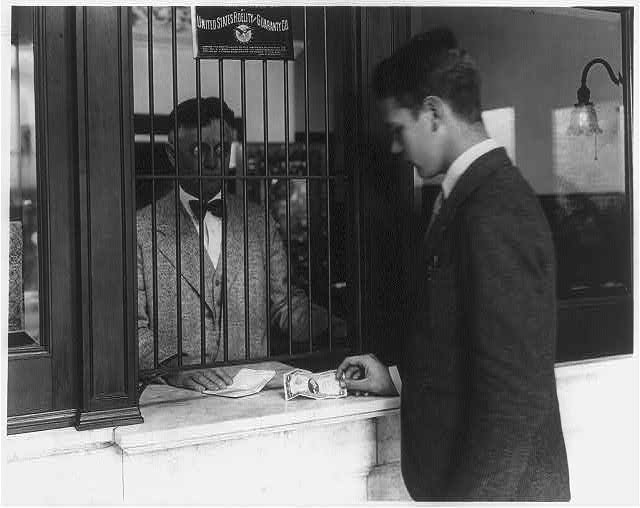
Here is how I learned that, and what each kind of no actually wants from you.
The first no came from a bank. My father, Edward, had banked there for forty years, through two mergers and three name changes, and I had a power of attorney in a folder on the passenger seat. The woman at the desk was kind about it. She said the document looked fine. She said the bank did not accept outside powers of attorney. She said they had their own form, that he would need to come in and sign it, and that she was sorry.
The second no came from a brokerage, two days later, over the phone. Same folder, same document. This time nobody was sorry. The document had to be reviewed by a department that did not take calls, and the review took ten to fifteen business days, and I would be notified.
The third no came from a government office, and it was different in kind, though I did not know that yet. I had brought the same power of attorney. The man behind the glass did not read it. He did not need to. He told me, without malice, that his agency does not recognize powers of attorney at all, and that there was another process, with another name, and that it started with a different form.
Three institutions. One week. One word. I went home believing I had been told the same thing three times and had lost three times. That was wrong, and the error cost me about a month.
Why would a bank reject a power of attorney?
Here is what I did not understand standing at those three windows. A no is not a verdict. It is a symptom. Underneath every no there is a reason, and the reason decides what will work next. Push on the wrong reason and you can push forever.
There are three reasons, and once you can tell them apart, most of the fury drains out of the week.
The first kind of no is a product decision. Somebody at the bank, years ago, decided that the safest way to handle a proxy was to make the proxy sign the bank's own paper. It is not the law. It is not even, usually, written policy the front desk can show you. It is the way the product was built. The door has a handle. It just opens the other way from how you pushed it.
The second kind of no is policy. The brokerage has a written rule, somewhere, that outside documents go to a review desk, that the review desk has a queue, and that the queue is the queue. The person on the phone cannot override it, and neither can her supervisor, and that is not stubbornness. That is a bolt thrown from the inside. The door is real and so is the bolt. But bolts get drawn back. Policies have exceptions, escalation paths, and a paragraph near the bottom that says what to do when the standard path does not fit.
The third kind of no concerns the agency’s legal authority. Social Security requires its own representative-payee appointment to manage someone else’s benefits; a power of attorney is not that appointment. The IRS distinction is different: a non-IRS power of attorney may qualify if it meets the agency’s requirements. IRS guidance explains the authorization routes. Do not treat every government office as having the same rule.

Is the power-of-attorney refusal a bank rule or a legal requirement?
You will not always be told. The people at the window often do not know themselves; they know the answer, not the reason. So you have to read it.
Start with the simplest question, out loud and politely: Is that your bank's rule, or is it the law? Most front-line staff will answer honestly if asked plainly. If they hesitate, you have probably found a product decision dressed up as something bigger.
Then ask for the rule in writing. A product decision usually cannot be produced on paper, because it was never written down as a rule; it lives in the software and the training. A policy can be produced, though it may take a manager. A statute can be cited, and the person citing it will usually be relieved you asked, because it means you have stopped arguing with them.
Then look at who is saying it. If the no comes from the branch, the call center, or the chat window, you are almost certainly hearing a product decision or a policy. If it comes from a form, a notice, or a page on a government site that names an authority, you are likely at a statute.
And watch the shape of the fix they offer. "Come in and sign our form" is a product answer. "It goes to review" is a policy answer. "There is a separate process" is a statute answer. Each of those sentences tells you exactly which door you are standing in front of, if you are listening for it.
What can you do when a power of attorney is refused?
A product no wants you to use the product the way it was built. That is annoying, and it is also the fastest door in the building. My father signed the bank's own form. It took an afternoon. I had spent a week being angry about an afternoon.
A policy no wants a reason to make an exception, or a channel that runs faster than the one you are in. It wants the words escalate, supervisor, written request, and sometimes complaint. The brokerage's review desk had a fax number nobody mentioned and an expedite process nobody offered, and both existed the whole time. I found them by asking, in writing, what the options were for a proxy whose principal could not wait fifteen business days.
A statute no wants nothing from you except to stop pushing on the door and go find the right key. The Representative Payee process is its own thing, with its own application and its own review. It is not faster. But it is real, and once I stopped trying to make my folder work, it moved.
What should you ask the bank when it refuses your parent's power of attorney?
Reading the no is half the work. The other half is what comes out of your mouth in the thirty seconds after you hear it, when you are tired and your parent is standing beside you pretending not to be embarrassed. Here is what I say now, in order, and why each line is there.
"I understand. Is that the bank's rule, or is it the law?" This is the sorting question. Ask it flat, without heat. You are not challenging the person; you are asking them to tell you which door you are at, and most people will.
"Can I get that in writing, or can you point me to where it's written?" Ask for the specific policy or legal basis. An answer from the front desk may need review; the absence of a written explanation does not settle your rights.
"What do people in my situation usually do?" This is the question that surfaces the workaround the front desk knows and is not scripted to offer. The bank's own form. The expedite fax. The separate process with the separate name. Institutions almost always have a path for the exception; they just do not lead with it, because leading with it invites everyone to use it.
"Who would I write to if I wanted to ask for an exception?" Only for a policy no. It signals you know the difference between the person in front of you and the rule behind them, and it gets you a name, an address, or a department, which is the thing a written request needs.
And then, whichever door it is: "Thank you. I'll do that." Even when you are furious. Especially then. The person at the window will see you again, and the ones who were decent to them get their calls returned.
When should you contact an elder-law attorney about a refusal?
A lawyer can help with the document and with an institution’s refusal to honor it. A bank’s procedure does not settle what state law requires. If the institution will not explain its refusal, if your parent cannot execute new documents, or if access to essential money is at risk, seek advice from the attorney who prepared the document or an elder-law attorney. The three-door model helps you ask better questions; it does not decide whether a refusal is lawful.
A note on the parent standing next to you
Nobody warns you about this part. My father was not a bystander at those windows. He had banked at that branch when the teller's grandmother was a girl. He knew how to sign a form. And now his son was doing the talking while a stranger explained that his signature, on a document he had chosen to sign, was not going to be enough.
I got that part wrong more than once. I talked over him. I answered questions that were addressed to him. I was trying to be efficient and I was being rude, and the rudeness was aimed at the one person in the room who had done nothing wrong.
What worked, later, was narrating. "Dad, they need you to sign their version. Same thing you already signed, their paper." Out loud, in front of the teller, so he was in the conversation and not the subject of it. It cost ten seconds. It gave him the afternoon back too.
The week I lost
I want to be exact about what the misreading cost, because that is the whole point.
I treated the bank's no as if it were the government's: immovable. So I wrote a letter to the bank's legal department, which was the wrong lever, and waited two weeks for a reply that told me to come into the branch.
I treated the brokerage's no as if it were the bank's: a form to sign. So I kept calling the front line, asking for the form, and there was no form, because the answer was a queue and the queue needed a nudge, not a signature.
And I treated the government's no as if it were the brokerage's: a review that could be hurried. So I called back three times to ask about status on a document that was never going to be reviewed, because it was never going to be accepted.
Three wrong levers. Roughly a month. None of it was necessary, and none of it was my fault in the way I felt it was. The system is built for one person, one account, one login. Everything past that is an exception, and exceptions get handled by whichever kind of no the institution happens to have in stock.
Why the reason outlives the workaround
I could give you the bank's form, the brokerage's fax number, and the payee application. In a year, one of them will have changed. In three years, two of them. The tail of institutional exceptions is long and it is permanent, and a directory of workarounds ages out before the ink is dry.
The reading does not age. Product, policy, statute. Ask which one, ask for it in writing, watch who is talking and what shape the fix takes. It is a useful way to begin, but rights and deadlines depend on the document, institution and applicable law.
It is their money. The system just forgot. Reading the no is how you remind it.
Sources and further help
- Consumer Financial Protection Bureau: when a bank asks for its own POA form
- Social Security: representative-payee questions
- IRS: power of attorney information
Source links checked September 20, 2026. This article offers general information; the linked authorities explain the rules and guidance in more detail.
This is the idea at the center of Part Two of Managing Mom's Money With Love, the second Tempered Press book, out now on Amazon. The first, When the Keys Go, is at the typesetter. One email when a book ships. Nothing between.
The books
- When the Keys GoA 2 a.m. guide to caring for your aging parents — and forgiving yourself. out now on Kindle.Buy on Amazon now
- Managing Mom's Money With LoveA field guide to your aging parents' affairs — and the institutions that keep saying no. out now on Amazon.Buy on Amazon now
One email when a book ships. Nothing between. Unsubscribe any time; never sold or shared.