Why do I worry so much — and why do I worry about everything all the time?
Published by Corso & Alexander · About David Luria
You worry so much because you carry an alarm system built to go off early and often, and because somewhere along the way you came to believe that the worrying is what keeps the bad thing from happening. The first part is wiring, shared in some degree by everyone who has ever lived. The second part is a belief, and it is wrong. The alarm fires at low thresholds because, for most of human history, a false alarm cost a little and a missed one cost everything; the belief survives because most of the things you worry about never happen, and the worry takes the credit. Worrying about everything all the time is what the two produce together: a sensitive detector, read by a mind that thinks the reading is the reason it is safe. Neither is a defect of character, and both can be worked on, though not by trying to worry less.
The rest of this note is about the detector, the belief, what it costs, and what loosens it.
Is worrying the same as anxiety?
No, though they travel together. Anxiety is a state of the body: raised arousal, a tightened chest, attention pulled toward threat. Worry is a stream of thought, mostly in words, about what might go wrong. Thomas Borkovec at Penn State, whose questionnaire most researchers still use to measure worry, showed in 1990 with Jennifer Inz that worriers think in sentences rather than pictures; asked what went through their minds, they reported talk, not imagery. Anxiety can run without worry, as in a phobia. Worry can run in a fairly calm body, as anyone who has lain still at night making lists can confirm. The earlier note on why the mind races all the time takes the state. This one takes the stream, the part you have a say in.
Why do I worry about everything all the time?
Because the detector is set low, on purpose, by a designer who was not thinking about your comfort.
Randolph Nesse, a psychiatrist at the University of Michigan and a founder of evolutionary medicine, set this out in 2001 in a paper in the Annals of the New York Academy of Sciences called "The Smoke Detector Principle." A smoke detector that goes off when you make toast is annoying, and nobody concludes it is broken. It is set that way because the two mistakes do not cost the same. A false alarm costs a minute with a dish towel. A missed fire costs the house. Any engineer facing that asymmetry tunes the detector to fire early, and accepts the toast. Natural selection, Nesse argued, faced the same arithmetic with fear. The ancestor who ran from a hundred rustles in the grass, ninety-nine of them wind, outlived the one who waited to be sure. Defensive responses, he concluded, are expressed far more often than they are needed, and that is the system working as designed.
The equipment was tuned for a world in which the things worth worrying about were few, near and fatal, and worrying about the rest was cheap. The equipment has not changed. The world has. A nervous system built to track a few dozen faces and whatever moved in the tall grass now takes in a planet before breakfast: wars, markets, a stranger's accident, a friend's diagnosis, a bill. Every one is a rustle in the grass to a detector that sorts by presence, not importance. The low threshold that was a bargain in the valley is expensive in the feed.
There is a second mechanism, nearer the surface. Andrew Mathews, then at the Medical Research Council's unit in Cambridge, asked in the title of a 1990 paper in Behaviour Research and Therapy, "Why worry?" His answer, from a series of attention experiments, was that habitual worriers show a bias others do not: their attention is drawn to threatening information faster and held by it longer, even when the threat is irrelevant to the task in front of them. In 2012, with Colette Hirsch at King's College London, he set out a model in the same journal in which that bias, the verbal form of the thinking, and a weakened ability to disengage combine into a loop. "Everything" is not an exaggeration from the inside. It is what a threat-biased attention system reports when pointed at an ordinary day.
Is worrying hereditary?
Partly, and the honest figure is smaller than people from worrying families expect. In 2001 John Hettema, Michael Neale and Kenneth Kendler at Virginia Commonwealth University pooled the twin and family studies then available into a meta-analysis in the American Journal of Psychiatry. For generalized anxiety disorder, the condition whose defining feature is worry, heritability came out at roughly a third. The remaining two thirds was environment, most of it the kind siblings in the same house do not share. A third is real, and well short of destiny.
What is inherited is not worry but a temperament that makes worry the easy path. Jerome Kagan at Harvard followed children from four months of age into adulthood and found that about one in five infants met new sights and sounds with vigorous motion and crying, a pattern he called high reactivity; a share of those became watchful children, and a share of those became adults who scanned rooms and rehearsed outcomes. The pattern was stable but not fixed; his 1994 book Galen's Prophecy is the long account. The short one is that if your mother worried and her mother worried, you likely arrived with a detector set a notch low, and the rest of the dial is yours.
Why do I worry so much about what people think of me?
Because the detector has a channel tuned to the group, and for most of human history the group was the difference between living and not.
Mark Leary at Duke proposed in 1995, with colleagues in the Journal of Personality and Social Psychology, that self-esteem is a gauge that monitors one quantity: how much the people around us value having us around. He named it the sociometer. When the reading drops, the gauge produces a feeling we experience as low self-worth, and the feeling is a signal to repair our standing. His experiments showed self-esteem rising and falling with cues of acceptance and rejection, including rejection by strangers the subjects would never see again. The gauge does not check whether the audience matters, only whether it is there.
Worry about what people think is that gauge running forward in time, rehearsing the reading before the room. The replay afterward, hunting for the moment you said the wrong thing, is what the earlier note on why you overthink everything covers under post-event processing, and the finding there, that the audience was mostly thinking about itself, applies here in advance. What this note adds is why the channel is so loud. Exclusion from a band of forty, with no other band for a hundred miles, was a death sentence, and a gauge that under-reported it left no descendants. It now reads a meeting of nine people you will see again on Thursday as if the stakes were the same, and it reads a stranger online, who exists to you only as a sentence, the same way.
Why do I worry so much about the future?
Because the mind is better at imagining bad futures than at predicting how it would feel inside them, and the gap runs in one direction.
In 1998 Daniel Gilbert at Harvard and Timothy Wilson at the University of Virginia, with colleagues, published a set of studies in the Journal of Personality and Social Psychology under the title "Immune Neglect." The best known followed assistant professors coming up for tenure. Those still waiting predicted that being denied would leave them much less happy for years. Those who had actually been denied, some years earlier, reported happiness no different from those granted it. The pattern repeated across breakups, election losses and failed job applications. The authors' explanation was that people neglect their own psychological immune system, the ordinary processes by which a person makes sense of a loss and moves on. The worry about the future is not only a prediction that the bad thing will happen. It is a prediction about how it would feel, by a forecaster who leaves out the part of himself that would cope.
There is a second reason, and it is uncomfortable, because it suggests the worry is doing a job for you. Michelle Newman and Sandra Llera at Penn State proposed in 2011, in Clinical Psychology Review, what they called the contrast avoidance model. Chronic worriers, made to worry in the laboratory and then shown something distressing, did not feel the sharp drop calm people felt; they were already low. Worry, on this account, is a way of staying braced. The worrier would rather carry a steady, moderate dread than risk being caught cheerful by a blow. The bracing is not aimed at being right; most of the forecasts are wrong, nine in ten by the worry diary described in the overthinking note. It is aimed at never being surprised, and it buys that at the price of being braced all the time.
What does worrying do to the body?
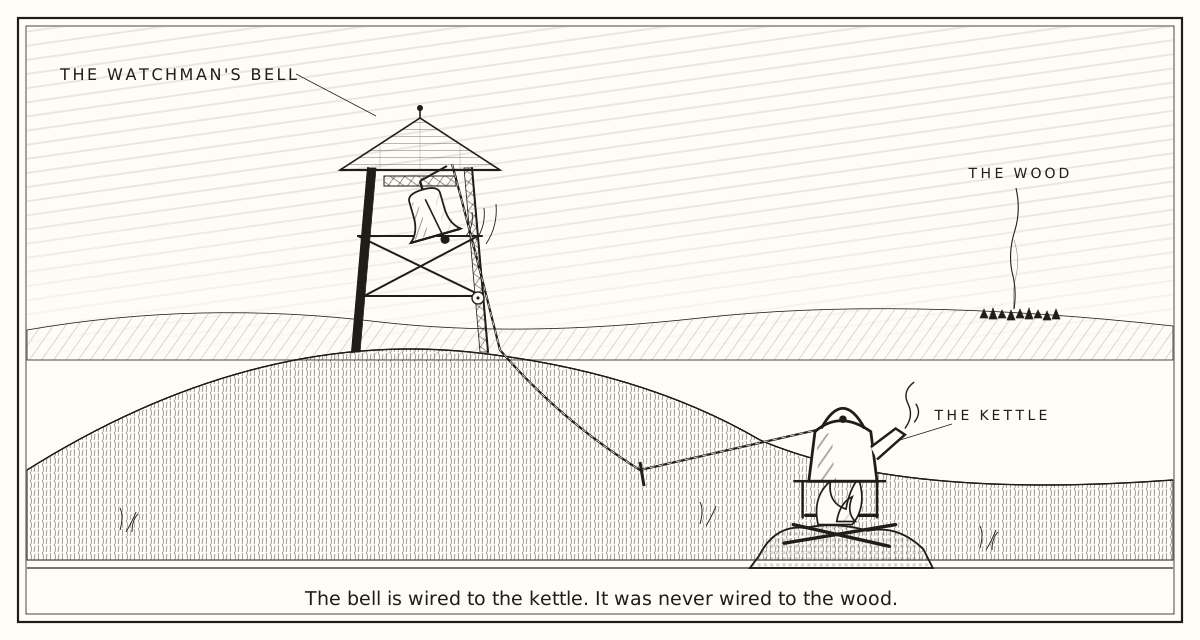
It keeps the body in the state the threat would produce, for as long as the thinking lasts, which is the whole of the problem.
Jos Brosschot at Leiden, with William Gerin and Julian Thayer, put the argument in a 2006 paper in the Journal of Psychosomatic Research and called it the perseverative cognition hypothesis. The physiology of stress had been studied almost entirely during the stressor: the exam, the speech, the cold-water test. But most stressors last minutes, and the body's response, left alone, subsides in minutes. What does not subside is the thinking about them, before and after, for hours or days, and during that thinking the body behaves as if the stressor were still present: heart rate up, blood pressure up, cortisol up. The stressor, they argued, is not what damages health. The prolonged activation is, and worry and rumination are what prolong it. Later work from the same group found that worry during an ordinary day, sampled on the hour, tracked with reduced heart-rate variability, the gap between heartbeats that widens at rest and narrows when the body is braced.
This is the sense in which worrying is bad for your health. Not that a worrying temperament dooms anyone; the associations in the long studies are modest. But the body does not distinguish the imagined threat from the real one. Nesse's smoke detector was cheap because a false alarm cost a minute. The modern false alarm, fed by rumination, can cost a week.
What does worrying do — does it ever help?
It helps at the start; the worrier's error is to mistake the first minute for the rest of the hour.
Mathews's answer to "why worry" was that it begins as problem solving: an unresolved threat is held in mind so that something can be done about it. That is useful for exactly as long as it produces a step. The trouble is a belief that attaches to the process. Adrian Wells at the University of Manchester proposed in 1995, in Behavioural and Cognitive Psychotherapy, that chronic worriers hold what he called positive beliefs about worry: that worrying keeps them safe, shows they care, prepares them. In 1997, with Sam Cartwright-Hatton, he published a questionnaire measuring those beliefs and found them highest in the people who worried most. The beliefs are rarely said aloud, because said aloud they are plainly odd. But the belief is what makes stopping feel dangerous. If worrying is what keeps the plane up, you cannot stop until it lands.
Wells then described a second layer, which is where ordinary worry becomes the kind that fills a life. The worrier, having worried for weeks, begins to worry about the worrying: that it is uncontrollable, damaging, a sign something is wrong with them. Worry about worry he called type 2 worry. The reader typing "why do I worry about everything all the time" is, in Wells's terms, already there. The question is itself a type 2 worry, and it is answerable: the worrying can be postponed, and demonstrating that is the single most useful thing a worrier can do.
How to stop worrying so much
Not by trying; the attempt to stop a thought is the surest way to keep it. What the evidence supports is testing the beliefs the worry rests on, changing what you do when it arrives, and moving the body out of the braced state. The overthinking note covers the general moves: concreteness, distance, a fixed worry period, a decision made once. These are specific to worry.
Test the belief that it is uncontrollable. Wells's therapy begins with an experiment rather than an argument. When a worry arrives, name it in a word, decide to think about it at a set time later in the day, and return to what you were doing. You will not succeed every time. You will succeed often enough, within days, to disprove the belief that the worry runs itself, and that belief, once gone, takes much of the dread with it. Postponement is not suppression. You are telling the thought when it will be heard, not to go away.
Test the belief that it helps. Write down, for one worry, what the worrying is supposed to achieve, and then what it has achieved in the past week. For a worry about a thing you can act on, the answer is usually one action, which you can take and then stop. For a worry about a thing you cannot act on, the honest answer is nothing, and seeing that on paper is different from knowing it. Robert Leahy, a clinical psychologist in New York, drew this line in his 2005 book The Worry Cure as the difference between productive worry, which leads to a step you can take today, and unproductive worry, which leads only to more worry. A clinician's rule rather than a study, but the right question, and most worries answer it in under a minute.
Treat uncertainty as the thing to tolerate, not the thing to remove. The Laval group whose work on intolerance of uncertainty the overthinking note describes built a treatment around it. In 2000 Robert Ladouceur, Michel Dugas and colleagues reported in the Journal of Consulting and Clinical Psychology a randomized trial in which people with generalized anxiety disorder were taught to recognize the demand for certainty inside their worries, to treat the demand as the problem, and to act on decisions that stayed uncertain. Most of the treated group no longer met criteria for the disorder afterward, and the gains held at a year. The practical form is small: when a worry says "but I need to know," you answer that you do not, and do the next thing anyway. That sentence, said and acted on a few dozen times, is most of the treatment.
Move. Matthew Herring and colleagues at the University of Georgia ran a small trial, reported in 2012 in Psychotherapy and Psychosomatics, with thirty sedentary women diagnosed with generalized anxiety disorder, assigned to six weeks of twice-weekly resistance training, aerobic exercise or a waiting list. Worry fell in both exercise groups, and more of the exercisers than of the waiters no longer met criteria at six weeks. Thirty women is a small trial, and the authors said so. But the mechanism is Brosschot's in reverse: a body made to work hard and then rest cannot stay braced, and a worry without a braced body to run on is a weaker thing.
Know when it is more than a habit. Worry that has run most days for six months, with restlessness, poor sleep, tension and exhaustion, and that costs you work or people, is the pattern clinicians call generalized anxiety disorder, and it responds well to treatment, the Ladouceur trial being one example. This note is not that treatment; it is the account of why the worry is there, which is where treatment begins.
What is the one thing to hold on to?
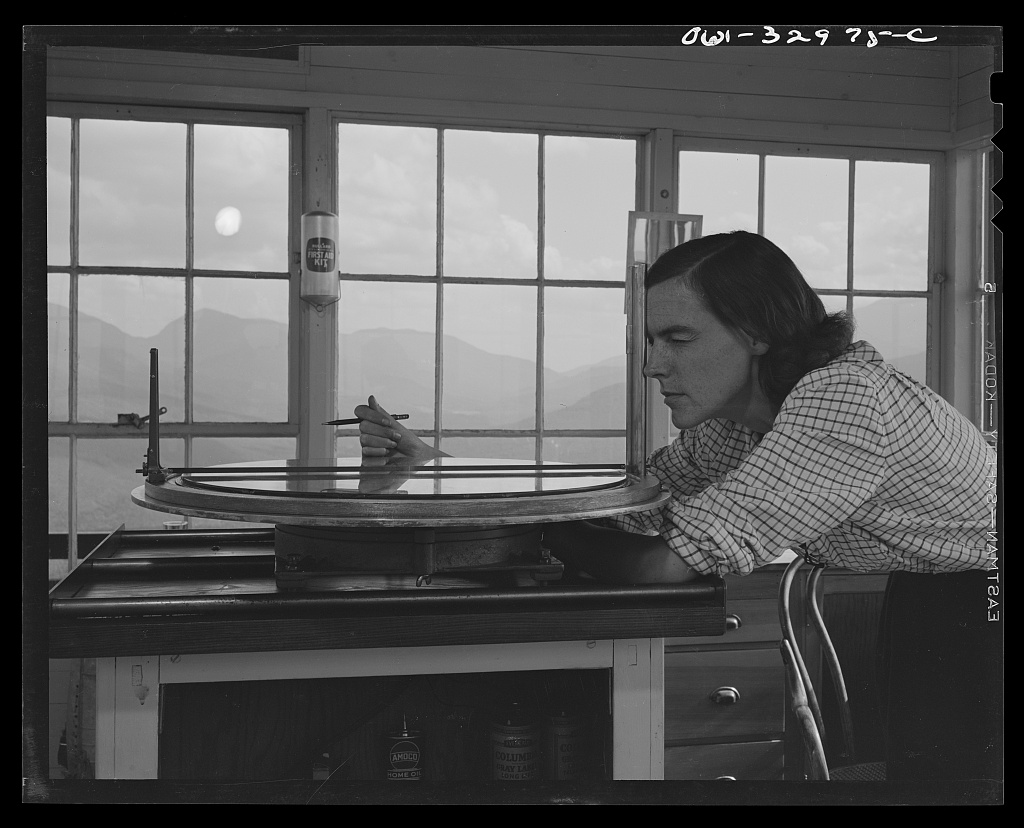
That the alarm is not the fire. You worry so much because you carry a detector set low by a designer who cared about missed fires and not at all about your afternoons, and because you have come to believe that the ringing is what keeps the house standing. The first is yours for life, and in a dangerous week you will be glad of it. The second is a belief, and beliefs can be tested. Postpone the worry once and it waits; ten times and you have learned it is yours to schedule. Ask what it is for and most of it has no answer. The lookout in the photograph noticed smoke, took a bearing, sent a message and went back to watching. She did not stare at one ridge all afternoon. That is the whole of the skill, and it can be learned.
One email when a book ships. Nothing between.
One email when a book ships. Nothing between. Unsubscribe any time; never sold or shared.